


Department of Chemistry
MIT Room E25-348A
(617) 324-5670
Jeff Gahan
Areas Of Expertise
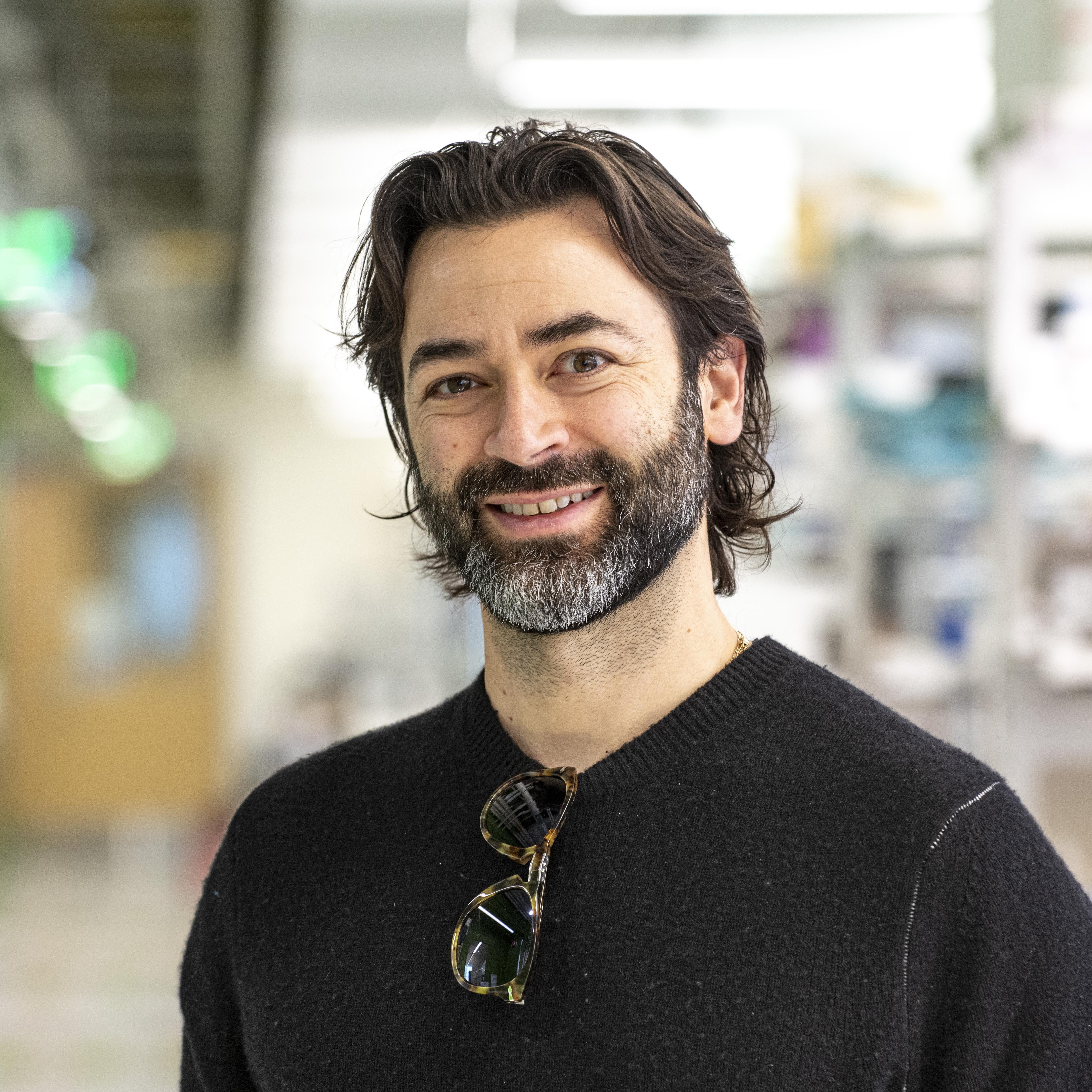
Alex K. Shalek is the J.W. Kieckhefer Professor in the Institute for Medical Engineering and Science (IMES), and the Department of Chemistry, as well as an Extramural Member of The Koch Institute for Integrative Cancer Research at MIT. He is also a Member of the Ragon Institute, an Assistant in Immunology at MGH, and an Instructor in Health Sciences and Technology at Harvard Medical School. Shalek was has named the director of IMES, effective August 1, 2024. Dr. Shalek received his bachelor’s degree summa cum laude from Columbia University and his Ph.D. from Harvard University in chemical physics under the guidance of Hongkun Park, and performed postdoctoral training under Hongkun Park and Aviv Regev (Broad/MIT). His lab’s research is directed towards the development and application of new approaches to elucidate cellular and molecular features that inform tissue-level function and dysfunction across the spectrum of human health and disease. Dr. Shalek and his work have received numerous honors including a NIH New Innovator Award, a Beckman Young Investigator Award, a Searle Scholar Award, a Pew-Stewart Scholar Award, the Avant-Garde (DP1 Pioneer) Award from the National Institute for Drug Abuse (NIDA), and an Alfred P. Sloan Research Fellowship in Chemistry, as well as the 2019-2020 Harold E. Edgerton Faculty Achievement Award at MIT and the 2020 HMS Young Mentor Award.
The interdisciplinary research in the Shalek Lab aims to create and implement new approaches to elucidate cellular and molecular features that inform tissue-level function and dysfunction across the spectrum of human health and disease. This encompasses both the development of broadly enabling technologies as well as their application to characterize, model, and rationally control complex multicellular systems. With respect to technology development, we couple genomics, chemical biology, and nanotechnology to establish accessible, broadly-applicable cross-disciplinary platforms that enable us and others to profile and control cells and their interactions within complex multicellular systems. In addition to sharing this toolbox to empower mechanistic scientific inquiry across the global research community, we are applying it to uncover principles that inform ensemble immune responses within tissues, focusing on the roles of cellular heterogeneity and cell-to-cell communication. Current studies with partners around the world seek to methodically dissect human disease to understand links between cellular features and clinical observations, including how: immune cells coordinate balanced responses to environmental changes with tissue-resident cells; host cell-pathogen interactions evolve across time and tissues during pathogenic infection; and, tumor cells evade homeostatic immune activity. From these observations and those of others, we aim to construct a unified understanding of how disease alters tissue function at the cellular level and realize therapeutic and prophylactic interventions to reestablish or maintain human health. Overall, we hope that our principled, comprehensive approach not only provides valuable experimental and computational tools to advance many avenues of scientific inquiry, but also transforms how the community studies and engineers human immune responses in tissues.
Department of Chemistry
MIT Room E25-348A
(617) 324-5670
Jeff Gahan
Areas Of Expertise
Alex K. Shalek is the J.W. Kieckhefer Professor in the Institute for Medical Engineering and Science (IMES), and the Department of Chemistry, as well as an Extramural Member of The Koch Institute for Integrative Cancer Research at MIT. He is also a Member of the Ragon Institute, an Assistant in Immunology at MGH, and an Instructor in Health Sciences and Technology at Harvard Medical School. Shalek was has named the director of IMES, effective August 1, 2024. Dr. Shalek received his bachelor’s degree summa cum laude from Columbia University and his Ph.D. from Harvard University in chemical physics under the guidance of Hongkun Park, and performed postdoctoral training under Hongkun Park and Aviv Regev (Broad/MIT). His lab’s research is directed towards the development and application of new approaches to elucidate cellular and molecular features that inform tissue-level function and dysfunction across the spectrum of human health and disease. Dr. Shalek and his work have received numerous honors including a NIH New Innovator Award, a Beckman Young Investigator Award, a Searle Scholar Award, a Pew-Stewart Scholar Award, the Avant-Garde (DP1 Pioneer) Award from the National Institute for Drug Abuse (NIDA), and an Alfred P. Sloan Research Fellowship in Chemistry, as well as the 2019-2020 Harold E. Edgerton Faculty Achievement Award at MIT and the 2020 HMS Young Mentor Award.
The interdisciplinary research in the Shalek Lab aims to create and implement new approaches to elucidate cellular and molecular features that inform tissue-level function and dysfunction across the spectrum of human health and disease. This encompasses both the development of broadly enabling technologies as well as their application to characterize, model, and rationally control complex multicellular systems. With respect to technology development, we couple genomics, chemical biology, and nanotechnology to establish accessible, broadly-applicable cross-disciplinary platforms that enable us and others to profile and control cells and their interactions within complex multicellular systems. In addition to sharing this toolbox to empower mechanistic scientific inquiry across the global research community, we are applying it to uncover principles that inform ensemble immune responses within tissues, focusing on the roles of cellular heterogeneity and cell-to-cell communication. Current studies with partners around the world seek to methodically dissect human disease to understand links between cellular features and clinical observations, including how: immune cells coordinate balanced responses to environmental changes with tissue-resident cells; host cell-pathogen interactions evolve across time and tissues during pathogenic infection; and, tumor cells evade homeostatic immune activity. From these observations and those of others, we aim to construct a unified understanding of how disease alters tissue function at the cellular level and realize therapeutic and prophylactic interventions to reestablish or maintain human health. Overall, we hope that our principled, comprehensive approach not only provides valuable experimental and computational tools to advance many avenues of scientific inquiry, but also transforms how the community studies and engineers human immune responses in tissues.