


Areas Of Expertise
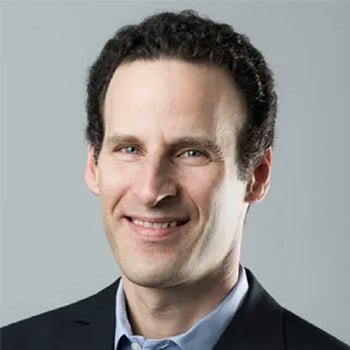
Jared Curhan is the Gordon Kaufman Professor and a Professor of Work and Organization Studies at the MIT Sloan School of Management, as well as Faculty Director of MIT’s Behavioral Research Lab. Curhan specializes in the psychology of negotiation and conflict resolution. A recipient of support from the National Science Foundation, he has pioneered a social psychological approach to the study of “subjective value” in negotiation—that is, the feelings and judgments concerning the instrumental outcome, the process, the self, and the relationship. His research uses the Subjective Value Inventory (SVI; Curhan et al., 2006) to examine the precursors, processes, and long-term consequences of subjective value in negotiation. He also studies the dynamics of negotiation and brainstorming. Curhan is Vice Chair for Research and a member of the Executive Committee of the Program on Negotiation (PON) at Harvard Law School, a world-renowned inter-university consortium dedicated to developing the theory and practice of negotiation and dispute resolution. He is also Director of the PON Research Lab and Director of MIT's Negotiation for Executives Program. Curhan founded the Program for Young Negotiators, Inc., an organization dedicated to the promotion of negotiation training in primary and secondary schools. His book, Young Negotiators (Houghton Mifflin, 1998) is acclaimed in the fields of negotiation and education, and has been translated into Spanish, Hebrew, and Arabic. It has been used to train more than 35,000 children across the United States and abroad to achieve their goals without the use of violence. Deeply committed to education at all levels, Curhan has received the Stanford University Lieberman Fellowship for excellence in teaching and university service, as well as MIT's Institute-wide teaching award, MIT Teaching with Technology Award, and MIT Sloan's Jamieson Prize for excellence in teaching. His three-day crash course, Negotiation Analysis, is open to all MIT students via lottery. He also offers a 10-week, open-enrollment online course with live negotiations, Mastering Negotiation and Influence. Curhan holds an AB in psychology from Harvard University and an MS and a PhD in psychology from Stanford University.
Curhan's research on the social psychology of conflict and negotiation has progressed through three distinct phases. His early work at Harvard University, funded by a grant from the Ford Foundation, examined the development of interpersonal negotiation skills among children (Curhan, 1999). Building upon existing developmental theory (Selman & Schultz, 1990), and inspired by principles espoused in the international bestseller, Getting to YES (Fisher, Ury, & Patton, 1991), Curhan's approach ultimately led to the publication of a negotiation textbook, Young Negotiators (Curhan, 1998). Curhan's book has since been translated into Spanish, Hebrew, and Arabic, and used to train more than 35,000 children across the United States and abroad. While at Stanford University, Curhan's research identified a critical disconnect between objective outcomes (i.e., explicit terms of an agreement) and "subjective value" (i.e., feelings and perceptions about the negotiation). For example, Curhan, Neale, & Ross (2004) found that negotiators' preferences change from moment to moment, in accordance with dissonance theory (Festinger, 1957) and reactance theory (Brehm, 1966). Thus two negotiators having reached an identical instrumental outcome might value the specific terms differently, depending upon the pattern of offers made and received during the negotiation. In another line of his research, Curhan explored the differential impact of cultural norms on instrumental "efficiency" (or Pareto optimality) versus relational satisfaction (Curhan, Neale, Ross, & Rosencranz-Engelmann, 2008). At MIT, Curhan developed the Subjective Value Inventory (SVI), a research instrument used to measure feelings and perceptions concerning the instrumental outcome, the process, the self, and the relationship in negotiations (Curhan, Elfenbein, & Xu, 2006). Curhan's current research, supported by a grant from the National Science Foundation, uses the SVI to explore precursors, processes, and long-term consequences of subjective value. In so doing, Curhan is advocating a scientific approach to the study of subjective value, whereby social and emotional outcomes can be studied with the same level of precision by which the instrumental or tangible aspects of negotiation have been studied for decades. Curhan also studies creativity as well as "micro-processes" in negotiation, including paraverbals, facial expressions, physiological arousal, and the role of silence.
Areas Of Expertise
Jared Curhan is the Gordon Kaufman Professor and a Professor of Work and Organization Studies at the MIT Sloan School of Management, as well as Faculty Director of MIT’s Behavioral Research Lab. Curhan specializes in the psychology of negotiation and conflict resolution. A recipient of support from the National Science Foundation, he has pioneered a social psychological approach to the study of “subjective value” in negotiation—that is, the feelings and judgments concerning the instrumental outcome, the process, the self, and the relationship. His research uses the Subjective Value Inventory (SVI; Curhan et al., 2006) to examine the precursors, processes, and long-term consequences of subjective value in negotiation. He also studies the dynamics of negotiation and brainstorming. Curhan is Vice Chair for Research and a member of the Executive Committee of the Program on Negotiation (PON) at Harvard Law School, a world-renowned inter-university consortium dedicated to developing the theory and practice of negotiation and dispute resolution. He is also Director of the PON Research Lab and Director of MIT's Negotiation for Executives Program. Curhan founded the Program for Young Negotiators, Inc., an organization dedicated to the promotion of negotiation training in primary and secondary schools. His book, Young Negotiators (Houghton Mifflin, 1998) is acclaimed in the fields of negotiation and education, and has been translated into Spanish, Hebrew, and Arabic. It has been used to train more than 35,000 children across the United States and abroad to achieve their goals without the use of violence. Deeply committed to education at all levels, Curhan has received the Stanford University Lieberman Fellowship for excellence in teaching and university service, as well as MIT's Institute-wide teaching award, MIT Teaching with Technology Award, and MIT Sloan's Jamieson Prize for excellence in teaching. His three-day crash course, Negotiation Analysis, is open to all MIT students via lottery. He also offers a 10-week, open-enrollment online course with live negotiations, Mastering Negotiation and Influence. Curhan holds an AB in psychology from Harvard University and an MS and a PhD in psychology from Stanford University.
Curhan's research on the social psychology of conflict and negotiation has progressed through three distinct phases. His early work at Harvard University, funded by a grant from the Ford Foundation, examined the development of interpersonal negotiation skills among children (Curhan, 1999). Building upon existing developmental theory (Selman & Schultz, 1990), and inspired by principles espoused in the international bestseller, Getting to YES (Fisher, Ury, & Patton, 1991), Curhan's approach ultimately led to the publication of a negotiation textbook, Young Negotiators (Curhan, 1998). Curhan's book has since been translated into Spanish, Hebrew, and Arabic, and used to train more than 35,000 children across the United States and abroad. While at Stanford University, Curhan's research identified a critical disconnect between objective outcomes (i.e., explicit terms of an agreement) and "subjective value" (i.e., feelings and perceptions about the negotiation). For example, Curhan, Neale, & Ross (2004) found that negotiators' preferences change from moment to moment, in accordance with dissonance theory (Festinger, 1957) and reactance theory (Brehm, 1966). Thus two negotiators having reached an identical instrumental outcome might value the specific terms differently, depending upon the pattern of offers made and received during the negotiation. In another line of his research, Curhan explored the differential impact of cultural norms on instrumental "efficiency" (or Pareto optimality) versus relational satisfaction (Curhan, Neale, Ross, & Rosencranz-Engelmann, 2008). At MIT, Curhan developed the Subjective Value Inventory (SVI), a research instrument used to measure feelings and perceptions concerning the instrumental outcome, the process, the self, and the relationship in negotiations (Curhan, Elfenbein, & Xu, 2006). Curhan's current research, supported by a grant from the National Science Foundation, uses the SVI to explore precursors, processes, and long-term consequences of subjective value. In so doing, Curhan is advocating a scientific approach to the study of subjective value, whereby social and emotional outcomes can be studied with the same level of precision by which the instrumental or tangible aspects of negotiation have been studied for decades. Curhan also studies creativity as well as "micro-processes" in negotiation, including paraverbals, facial expressions, physiological arousal, and the role of silence.