


Areas Of Expertise
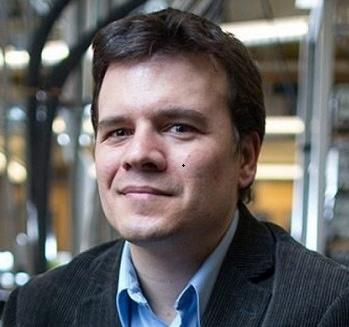
Pablo Jarillo-Herrero is the Cecil and Ida Green Professor of Physics. Jarillo-Herrero explores quantum transport in novel condensed-matter systems such as graphene, transition metal dichalcogenides, and topological insulators. In recent work, he has demonstrated the presence of a bandgap in graphene-based van der Waals heterostructures, novel quantum spin Hall and photothermoelectric effects in graphene, as well as light-emitting diodes, photodetectors, and solar cells in the atomically thin tungsten diselenide system. He has also made advances in characterizing and manipulating the properties of other ultrathin materials, such as ultra-thin graphite and molybdenum disulphide, which lack graphene’s ultrarelativistic properties, but possess other unusual electronic properties. After earning an M.S. at the University of Valencia, Spain, in 1999 and another at the University of California at San Diego in 2001, Jarillo-Herrero earned his Ph.D. at the Delft University of Technology in 2005. He remained at Delft for a year as a postdoc and then worked as a NanoResearch Initiative Fellow at Columbia University until he joined the MIT faculty in 2008. Jarillo-Hererro’s awards include an NSF Career Award (2008), an Alfred P. Sloan Fellowship (2009), the IUPAP Young Scientist Prize in Semiconductor Physics (2010), a DOE Early Career Award (2011), a Presidential Early Career Award for Scientists and Engineers (PECASE, 2012), an ONR Young Investigator Award (2013), and a Moore Foundation Investigator Award (2014).
Professor Jarillo's research interests lie in the area of experimental condensed matter physics, in particular quantum electronic transport in novel low dimensional nanomaterials, such as graphene and carbon nanotubes. Graphene and carbon nanotubes (CNTs) are the 2- and 1-dimensional forms of graphite, respectively, and constitute ideal 2D and 1D systems to study the behavior of electrons in low dimensions. Since their discovery (~1993 for single wall CNTs and ~2004 for graphene) these materials have fascinated physicists, chemists, engineers and even biologists because of their amazing properties. Jarillo's group focuses on understanding the novel electronic properties of these materials stemming from their unique electronic structure. On the fundamental side, electrons in graphene, for example, behave in many ways similar to "charged neutrinos". On a more "technological" side, the spin dynamics of confined electrons in CNTs and graphene is expected to be very rich, and enables many basic experiments in the area of spintronics and quantum information processing.
Areas Of Expertise
Pablo Jarillo-Herrero is the Cecil and Ida Green Professor of Physics. Jarillo-Herrero explores quantum transport in novel condensed-matter systems such as graphene, transition metal dichalcogenides, and topological insulators. In recent work, he has demonstrated the presence of a bandgap in graphene-based van der Waals heterostructures, novel quantum spin Hall and photothermoelectric effects in graphene, as well as light-emitting diodes, photodetectors, and solar cells in the atomically thin tungsten diselenide system. He has also made advances in characterizing and manipulating the properties of other ultrathin materials, such as ultra-thin graphite and molybdenum disulphide, which lack graphene’s ultrarelativistic properties, but possess other unusual electronic properties. After earning an M.S. at the University of Valencia, Spain, in 1999 and another at the University of California at San Diego in 2001, Jarillo-Herrero earned his Ph.D. at the Delft University of Technology in 2005. He remained at Delft for a year as a postdoc and then worked as a NanoResearch Initiative Fellow at Columbia University until he joined the MIT faculty in 2008. Jarillo-Hererro’s awards include an NSF Career Award (2008), an Alfred P. Sloan Fellowship (2009), the IUPAP Young Scientist Prize in Semiconductor Physics (2010), a DOE Early Career Award (2011), a Presidential Early Career Award for Scientists and Engineers (PECASE, 2012), an ONR Young Investigator Award (2013), and a Moore Foundation Investigator Award (2014).
Professor Jarillo's research interests lie in the area of experimental condensed matter physics, in particular quantum electronic transport in novel low dimensional nanomaterials, such as graphene and carbon nanotubes. Graphene and carbon nanotubes (CNTs) are the 2- and 1-dimensional forms of graphite, respectively, and constitute ideal 2D and 1D systems to study the behavior of electrons in low dimensions. Since their discovery (~1993 for single wall CNTs and ~2004 for graphene) these materials have fascinated physicists, chemists, engineers and even biologists because of their amazing properties. Jarillo's group focuses on understanding the novel electronic properties of these materials stemming from their unique electronic structure. On the fundamental side, electrons in graphene, for example, behave in many ways similar to "charged neutrinos". On a more "technological" side, the spin dynamics of confined electrons in CNTs and graphene is expected to be very rich, and enables many basic experiments in the area of spintronics and quantum information processing.