


Sanjay Sarma, vice president of open learning and professor of mechanical engineering, has focused his research on new uses for RFID and security for the internet of things.
Department of Mechanical Engineering
MIT Room 35-206
(617) 253-1925
Kaila House
Areas Of Expertise
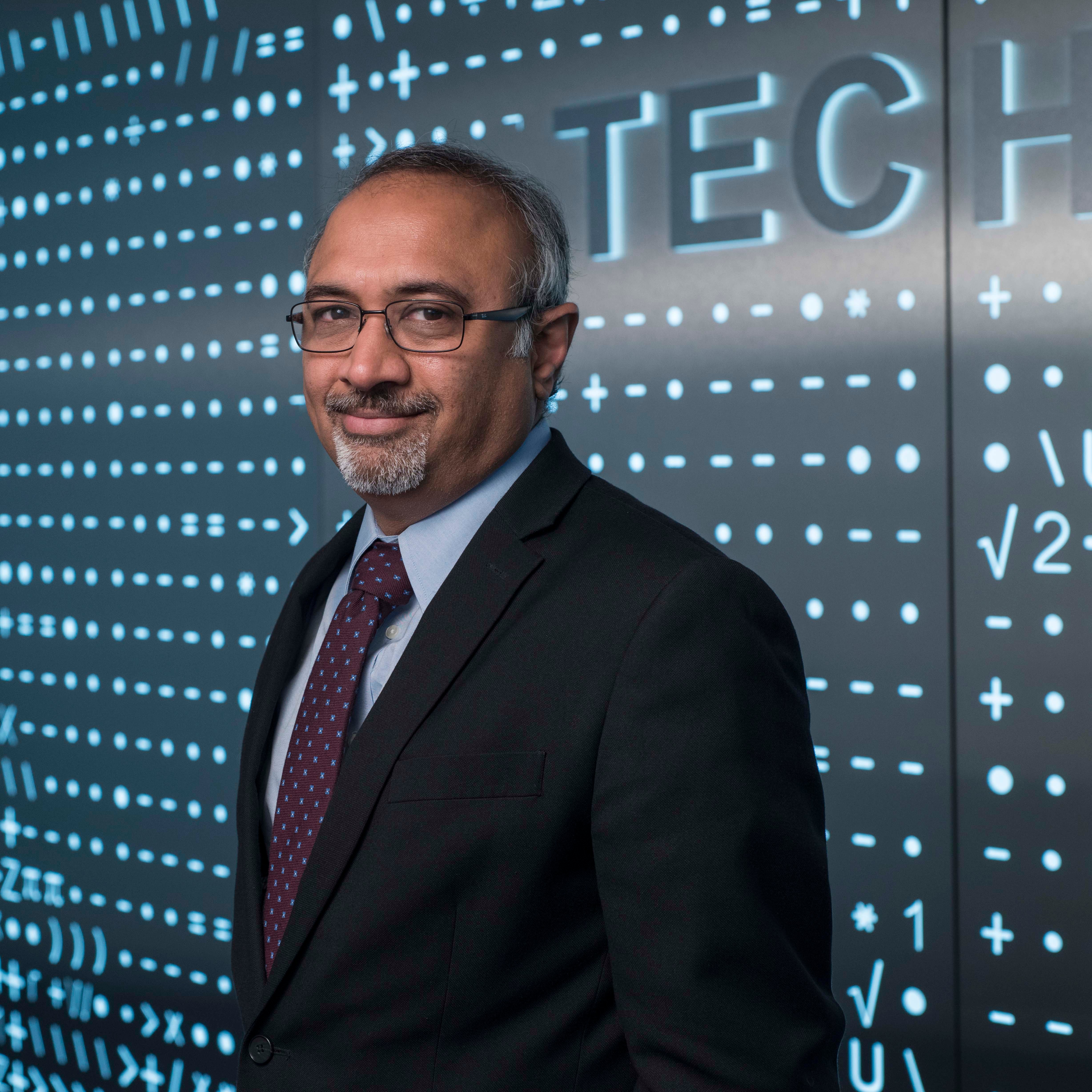
Sanjay Sarma is the Fred Fort Flowers (1941) and Daniel Fort Flowers (1941) Professor of Mechanical Engineering at MIT. He co-founded the Auto-ID Center at MIT and developed many of the key technologies behind the EPC suite of RFID standards now used worldwide. He was also the the founder and CTO of OATSystems, which was acquired by Checkpoint Systems (NYSE: CKP) in 2008. He serves on the boards of GS1US and Hochschild Mining and several startup companies including Top Flight Technologies. Dr. Sarma received his Bachelors from the Indian Institute of Technology, his Masters from Carnegie Mellon University and his PhD from the University of California at Berkeley. Sarma also worked at Schlumberger Oilfield Services in Aberdeen, UK, and at the Lawrence Berkeley Laboratories in Berkeley, California. He has authored over 100 academic papers in computational geometry, sensing, RFID, automation and CAD, and is the recipient of numerous awards for teaching and research including the MacVicar Fellowship, the Business Week eBiz Award and Informationweek's Innovators and Influencers Award. He advises several national governments and global companies. After nearly a decade running MIT’s digital learning platforms and education initiatives, Vice President for Open Learning, Professor Sarma stepped down from that post at the end of June 2023. Since 2012, he has led MIT Open Learning, first as director, then as dean, and finally as MIT vice president for open learning NOTE: Professor Sarma has been appointed to serve as the next Chief Executive Officer, President and Dean of the Asia School of Business. The effective date of his appointment is 30 May 2023.
Professor Sarma has overseen the creation of an array of complementary programs that open learning opportunities in different ways for people around the world. In 2015 he conceived of and then led the launch of the MicroMasters, a new type of credential that allows working professionals to pursue master’s-level courses online. It can also accelerate their time to degree once admitted to a traditional master’s program. MIT now offers five MicroMasters. Nearly 2 million students have enrolled, and 5,000 learners have earned MIT MicroMasters credentials. One hundred and eighty-eight individuals have graduated from an accompanying master’s program at MIT, and another 72 are currently enrolled. MicroMasters programs have been adopted by over 25 universities worldwide, with over 50 programs offered. Sarma also began MIT Bootcamps, which offers blended learning experiences for entrepreneurs, and which has reached over 2,400 learners. He launched MIT xPRO, offering online professional education courses; MIT Horizon, a content library to help professionals keep pace with latest advances in technology; and the Digital Credentials Consortium, where MIT has convened a global group of universities to design standards and an infrastructure for tamperproof, verifiable, digital academic credentials, which protect private data and give learners more control over how they share their own credentials. Most recently, he led the creation of the internal MIT platform known as MITx Online, which hosts many of MIT’s online courses. Under Sarma, MIT Open Learning also dramatically scaled existing programs. MITx has supported MIT faculty in developing nearly 250 unique online courses that together have run close to 1,000 times and are approaching 10 million cumulative registrations, extending MIT’s reach far beyond our residential campus. OpenCourseWare, whose site receives almost 2 million visitors per month, was just refreshed with a new, next-generation platform. Together with Professor Admir Masic, Sarma scaled the MIT Refugee Action Hub, which now serves refugees on four continents. And Open Learning’s Residential Education arm was critical in helping MIT transition its courses online during the pandemic, providing best practices and support for faculty, and later undergirding the transition of over 1,000 MIT courses to Canvas, MIT’s new learning management system. Sarma also generated and led a number of significant projects at MIT Open Learning, including desigining a competency-based learning curriculum for the new Woodrow Wilson Academy of Teaching and Learning; developing a STEM curriculum for 478 schools with 2,500 teachers and 60,000 learners in India; and early on in the pandemic launching a K-12 hands on STEAM curriculum, among others. A consummate innovator, Sarma led MIT Open Learning in researching the potential offered by artificial intelligence and virtual reality to transform education. NOTE: Professor Sarma has been appointed to serve as the next Chief Executive Officer, President and Dean of the Asia School of Business. The effective date of his appointment is 30 May 2023.
Department of Mechanical Engineering
MIT Room 35-206
(617) 253-1925
Kaila House
Areas Of Expertise
Sanjay Sarma is the Fred Fort Flowers (1941) and Daniel Fort Flowers (1941) Professor of Mechanical Engineering at MIT. He co-founded the Auto-ID Center at MIT and developed many of the key technologies behind the EPC suite of RFID standards now used worldwide. He was also the the founder and CTO of OATSystems, which was acquired by Checkpoint Systems (NYSE: CKP) in 2008. He serves on the boards of GS1US and Hochschild Mining and several startup companies including Top Flight Technologies. Dr. Sarma received his Bachelors from the Indian Institute of Technology, his Masters from Carnegie Mellon University and his PhD from the University of California at Berkeley. Sarma also worked at Schlumberger Oilfield Services in Aberdeen, UK, and at the Lawrence Berkeley Laboratories in Berkeley, California. He has authored over 100 academic papers in computational geometry, sensing, RFID, automation and CAD, and is the recipient of numerous awards for teaching and research including the MacVicar Fellowship, the Business Week eBiz Award and Informationweek's Innovators and Influencers Award. He advises several national governments and global companies. After nearly a decade running MIT’s digital learning platforms and education initiatives, Vice President for Open Learning, Professor Sarma stepped down from that post at the end of June 2023. Since 2012, he has led MIT Open Learning, first as director, then as dean, and finally as MIT vice president for open learning NOTE: Professor Sarma has been appointed to serve as the next Chief Executive Officer, President and Dean of the Asia School of Business. The effective date of his appointment is 30 May 2023.
Professor Sarma has overseen the creation of an array of complementary programs that open learning opportunities in different ways for people around the world. In 2015 he conceived of and then led the launch of the MicroMasters, a new type of credential that allows working professionals to pursue master’s-level courses online. It can also accelerate their time to degree once admitted to a traditional master’s program. MIT now offers five MicroMasters. Nearly 2 million students have enrolled, and 5,000 learners have earned MIT MicroMasters credentials. One hundred and eighty-eight individuals have graduated from an accompanying master’s program at MIT, and another 72 are currently enrolled. MicroMasters programs have been adopted by over 25 universities worldwide, with over 50 programs offered. Sarma also began MIT Bootcamps, which offers blended learning experiences for entrepreneurs, and which has reached over 2,400 learners. He launched MIT xPRO, offering online professional education courses; MIT Horizon, a content library to help professionals keep pace with latest advances in technology; and the Digital Credentials Consortium, where MIT has convened a global group of universities to design standards and an infrastructure for tamperproof, verifiable, digital academic credentials, which protect private data and give learners more control over how they share their own credentials. Most recently, he led the creation of the internal MIT platform known as MITx Online, which hosts many of MIT’s online courses. Under Sarma, MIT Open Learning also dramatically scaled existing programs. MITx has supported MIT faculty in developing nearly 250 unique online courses that together have run close to 1,000 times and are approaching 10 million cumulative registrations, extending MIT’s reach far beyond our residential campus. OpenCourseWare, whose site receives almost 2 million visitors per month, was just refreshed with a new, next-generation platform. Together with Professor Admir Masic, Sarma scaled the MIT Refugee Action Hub, which now serves refugees on four continents. And Open Learning’s Residential Education arm was critical in helping MIT transition its courses online during the pandemic, providing best practices and support for faculty, and later undergirding the transition of over 1,000 MIT courses to Canvas, MIT’s new learning management system. Sarma also generated and led a number of significant projects at MIT Open Learning, including desigining a competency-based learning curriculum for the new Woodrow Wilson Academy of Teaching and Learning; developing a STEM curriculum for 478 schools with 2,500 teachers and 60,000 learners in India; and early on in the pandemic launching a K-12 hands on STEAM curriculum, among others. A consummate innovator, Sarma led MIT Open Learning in researching the potential offered by artificial intelligence and virtual reality to transform education. NOTE: Professor Sarma has been appointed to serve as the next Chief Executive Officer, President and Dean of the Asia School of Business. The effective date of his appointment is 30 May 2023.